Military duty of secrecy
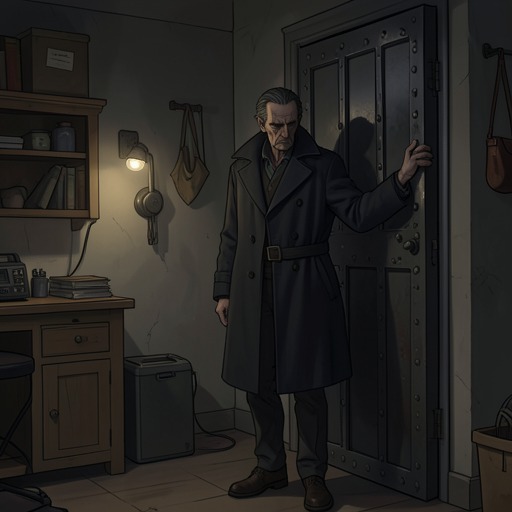
An Officer and a SpyMilitary duty of secrecy is the obligation Georges Picquart must navigate as an intelligence officer, investigator, and eventual witness in the Dreyfus case. The book makes that obligation a point of conflict: Picquart accepts that he cannot disclose national secrets indiscriminately, but he rejects the idea that confidentiality requires him to conceal the weakness of the case against Alfred Dreyfus or to stop investigating Charles Ferdinand Walsin Esterhazy. Meanwhile, senior officers invoke the chain of command to restrict both his inquiries and his speech, even as the existence and contents of secret material begin circulating beyond the army.
Secrecy and the secret file
When Picquart opens the envelope containing the secret file, he finds five documents, but the collection does not supply direct proof of Alfred Dreyfus’s guilt. Its nearest approach is an initial in an incriminating reference; the rest, in Picquart’s assessment, amounts to circumstance and insinuation. His review also exposes practical and chronological problems in the allegation that Dreyfus removed plans from the First Department: the plans would have been difficult to take unnoticed, their absence should have been detected, and the dates in Major Henry’s account do not fit Dreyfus’s period of service there. The file’s classified status therefore does not, in itself, make its contents persuasive.
Picquart brings the file and related evidence to General Gonse, Chief of Intelligence, alongside the Petit bleu and surveillance photographs connected with his investigation of Esterhazy. He tells Gonse that he had hoped the file would establish Dreyfus’s guilt beyond doubt, but that it would not withstand competent cross-examination. General Gonse’s response draws a sharp boundary around what Picquart is allowed to connect: he may investigate Esterhazy, but must leave the Bordereau out of that investigation. Secrecy here works not only by withholding documents from outsiders, but also by limiting which evidentiary relationships an officer may pursue.
Command as a restriction on inquiry and speech
General Gonse later frames the matter as a question of military authority. He acknowledges that the investigation of Dreyfus was not handled as professionally as it should have been, citing Jean Sandherr’s illness and the shortcomings of Armand du Paty. Yet he argues that reopening the case would revive wounds and risk tearing the country apart, and urges Picquart to help shut the matter down. Sympathy for Picquart’s position thus coexists with a demand that he accept the institutional consequences of the earlier investigation.
The demand becomes formal. General Gonse states the chain of command from the Minister of War through the Chief of Staff to himself, then orders Picquart not to investigate anything connected with the Dreyfus case or disclose information to anyone unauthorized to receive it. This order does more than protect particular documents: it attempts to end Picquart’s work on the case altogether. Picquart salutes and leaves without answering, but the conflict between obedience and disclosure remains unresolved.
The transfer of intelligence material reinforces the same struggle over access. As Picquart prepares to leave on an inspection tour, General Gonse takes the file marked D and announces that Major Henry will henceforth bring the Agent Auguste material directly to him. Picquart protests that the source is the department’s most important one. The change places important information under the control of the senior officer who has already ordered Picquart to stop investigating, showing how control of the channels through which intelligence is collected and received can constrain what an investigator is able to establish.
Leaks and the limits of containment
The obligation to preserve secrecy becomes harder to enforce when information reaches the newspapers. After an article in L’Éclair claims that a secret file proved Dreyfus’s guilt, Picquart recognizes that this is the first press mention of the file and is troubled by its timing, since he has only just taken possession of the dossier. He lists the people who know about it: senior officers and intelligence personnel, the judges, President Fauré, the President’s doctor, and Mathieu Dreyfus, with an uncertain further circle beyond them. The count reaches twenty before accounting for how widely Mathieu may have repeated what he learned.
Picquart reflects that photography, telegraphy, railways, and newspaper presses have made the old ideal of a small, closed circle of confidants untenable. The leak might seem to support his warning that secrets will eventually emerge, but he expects it to provoke panic among General Gonse and Raoul le Mouton de Boisdeffre and to strengthen their efforts to contain his inquiry. The press disclosure therefore does not simply end secrecy; it intensifies the struggle over who may speak, what can be verified, and who will control the public account.
That struggle also exposes Picquart to public accusation. In an interview in Le Matin, Esterhazy blames him for the campaign against him, alleges that Picquart gave secret files to Louis Leblois, and presents his assignment to Tunisia as disgrace. Picquart experiences the newspaper appearance of his name as a sudden move from the shadows into public view. The charge recasts disclosure as misconduct, while the book’s account leaves the underlying distinction in view: Picquart is trying to bring evidence of Esterhazy’s suspected espionage to light without publishing protected material indiscriminately.
Witnessing without disclosing
At the trial of Émile Zola, Picquart faces the practical test of whether he can testify while honoring military confidentiality. He tells Fernand Labori that revealing the details of a document discussed in court would breach his oath of secrecy. Yet he also indicates that the tactic being used by General Gonse and Hubert-Joseph Henry is desperate. His restraint is deliberate: he will not disclose the secret document’s contents to counsel in an informal exchange, but he does not allow that restraint to become assent to the case being made against Dreyfus.
When Picquart takes the stand, he speaks for more than an hour without notes. He draws on his teaching experience to present a precise account, and confines his testimony to the evidence against Esterhazy: the Petit bleu, Esterhazy’s character and financial need, his suspicious interest in artillery, the match between his handwriting and the Bordereau, and the consequences of Picquart’s decision to take his suspicions to his superiors. He says he is determined not to betray secrets or indulge in personal attacks. The courtroom hears an extensive account, but one shaped by a boundary Picquart has chosen to maintain.
Picquart later states that he will do his best to reconcile his duty of confidentiality with his obligations as a witness. The tension is not resolved by treating either obligation as absolute. He accepts limits on what he can disclose, while insisting that those limits do not erase his responsibility to give evidence. His conduct presents secrecy as a constraint to be interpreted under pressure, not as a complete exemption from truth-telling.
From military silence to public record
Picquart also recognizes that he cannot publish an article or book himself while he remains subject to army discipline. At a clandestine meeting with political and literary figures, he says he has shared as much as he can without disclosing national secrets and argues that the affair must be removed from military jurisdiction and assembled into a coherent account. His proposed route into public discussion is indirect: others must organize the information into a narrative capable of showing its proportions, because he cannot openly become its author while bound by military discipline.
The boundary shifts after the Minister of War publicly quotes three documents in the Chamber of Deputies. Picquart then writes to Prime Minister Henri Brisson that he can establish before a competent tribunal that the two documents dated 1894 cannot be applied to Dreyfus and that the document dated 1896 shows evidence of forgery. He further says that the Minister of War and others may have been misled about the documents’ relevance and authenticity. This is not an unrestricted release of classified material; it is a targeted challenge to claims already made in public, framed as testimony Picquart is prepared to establish before a tribunal.
Across these episodes, military duty of secrecy has two competing functions. It can protect intelligence and limit unauthorized disclosure, but it can also be used through command, reassignment, and control of files to impede investigation and testimony. Picquart’s response is neither casual exposure nor silence at any cost: he withholds details when he believes his oath requires it, while seeking lawful and public means to contest the official account. The distinction between keeping secrets and concealing an injustice becomes the rule’s central significance in the narrative.